

Clearing out an apartment is a different exercise from clearing out a house. In a house the truck backs into the driveway and the load comes out the front door. In a Sydney unit the load travels through a building other people live in, and that building has rules about when and how.
Here is what changes, and what is worth sorting out before the day.
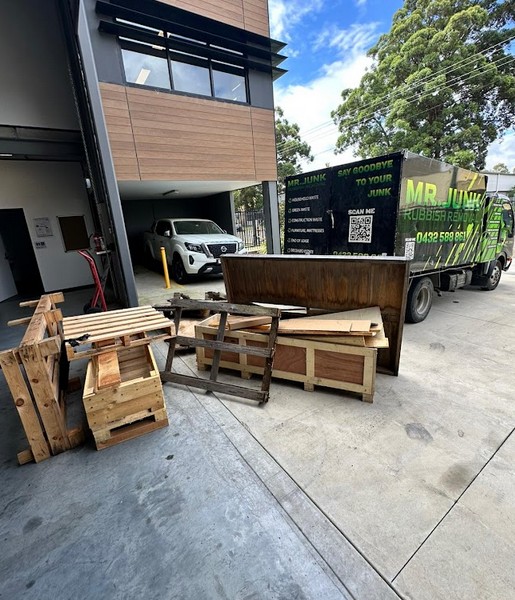
What makes clearing out an apartment different from clearing out a house
It comes down to the distance between where the furniture sits and where the truck can legally stop. A house clear out is one short carry. A unit clear out is three legs: the unit to the lift, the lift down to the basement or lobby, then across to the truck.
That is true whoever is clearing the unit: a downsizing owner, a tenant at the end of a lease, a family member handling an estate, or a property manager dealing with what was left behind. The contents differ. The three legs do not.
Booking the lift before your apartment clear out
Many Sydney apartment buildings have a service lift or goods lift that removals use instead of the passenger lift. Whether it needs booking, how far ahead, and how long it can be held vary from building to building. Your building manager or on site caretaker is who can tell you.
Worth asking them before you book a collection:
- Does the service lift need to be booked, and how much notice does the building want.
- Are protective blankets or a lift lining required before anything goes in.
- Are there hours when the lift cannot be used for a removal, such as early mornings or weekends.
- Is a key, fob or lift override needed to hold the doors on your floor.
When the unit has no lift and the stairs are the only way out
Plenty of Sydney units are in walk up blocks with no lift at all. The red brick three storey blocks through the Eastern Suburbs and the Inner West are the classic version, and the stairs are the whole story in those buildings.
Stair carries are slower and they need more hands, so the useful thing to tell us on the phone is the floor, the number of flights, and whether there is a turn at the half landing. A lounge suite that went up a straight run is a very different carry to one that has to be turned twice on the way down.
What your strata or building manager will want to know
Once anything leaves your front door it is generally on common property. In most strata buildings the lobby, corridor, lift, basement and bin room are common property rather than part of your lot, so nothing gets staged in them without asking first.
Some buildings also want to see a contractor’s certificate of currency before anyone works on common property. Whether yours does is a question for the strata or building manager, and it is quicker to ask than to find out on the morning.
One thing worth saying plainly: the bin room is not the answer. A bed base or a lounge left beside the building bins becomes a problem the owners corporation inherits, and the cost of clearing it can be charged back to the lot it came from.
We work with strata managers and residents across Sydney apartment buildings regularly. If yours would rather we arranged access with the manager directly, that is normal and we are happy to.
Where the truck parks during an apartment clear out
Residential basements normally have a height clearance bar at the entry, and a removal truck is usually taller than it allows. So the load is met at the loading dock, in a visitor bay or on the street, rather than down at your storage cage.
What you have at your address depends on the building and the council, and they are who confirms it. Some blocks have a dedicated dock with a booking sheet, some have a visitor bay and a boom gate, and some have nothing but the street out front. Tell us which, because where the truck can legally stop sets how long the carry is, and the carry is most of the work.
What fills a truck load when a unit is cleared
Apartments are small and people assume the load will be small with them. It rarely is, because a truck fills by volume rather than weight, and soft bulky things take more room than heavy compact ones.
What normally goes in a whole unit clear out:
- The bulky furniture: lounge suite, bed bases, bedroom furniture, dining setting and bookcases.
- The wardrobes and the linen press, once everything in them is bagged or boxed.
- Whitegoods and appliances: the fridge, washing machine and dryer take real space in a load.
- The kitchen cupboards and the pantry, cleared out into boxes.
- Electronics: old televisions, a desktop computer, printers and the drawer of cables.
- The balcony: pots with wet soil still in them, planters and an outdoor setting nobody has sat on since summer.
- Renovation leftovers: the old vanity, the replaced flat pack, offcuts and boxed tiles in the hall cupboard.
Then there is the storage cage in the basement, and that is the one that catches people out. A unit can look nearly empty upstairs while the cage still holds a surfboard, four suitcases, the Christmas boxes and a bike nobody has ridden since the last address. Open the cage and look in it before you describe the collection to anyone.
What can go on the truck and what cannot
Furniture, whitegoods, appliances, electronics, boxed household contents, timber and renovation debris all go, and metal appliances are fine as part of a load. The truck is set up for a proper clear out, so the more of the unit that goes at once, the better it works out.
What cannot go: chemicals, cleaning liquids, fuel, gas bottles and asbestos. Those need a licensed recycling centre or an eco waste facility, and your council website lists the nearest one.
Everyday bin rubbish is not part of a truck load either. Kitchen scraps and the general weekly rubbish stay with the building’s bins, which is what they are there for.
If you would rather clear the unit gradually, skip bags are the other way to do it. You fill the bag over a week or a fortnight, keep it in the garage space or on the balcony, and we collect it when it is ready. Skip bag compared with a skip bin covers which suits a unit, since a bin needs somewhere legal to sit and an apartment rarely has it.
Booking an apartment rubbish removal in Sydney
Have five things ready when you ring: the suburb and building, the floor, lift or stairs, where a truck can legally stop, and roughly what is going.
Book before 2pm and we can usually collect the same day, subject to availability. If you are working to a settlement, a final inspection or a handover, say so up front so the booking is locked to the date that actually matters.
For a whole unit the service is household rubbish removal, and the bulky part of it is usually old furniture removal. Handing a unit back at the end of a lease is end of lease rubbish removal, the same work with a bond deadline attached. Clearing a relative’s unit is deceased estate clearance, handled quietly and at your pace.
Not sure you need a truck at all? Ring and describe the unit anyway. If the sensible answer is a skip bag or a council collection, we will say so. Council hard waste compared with private junk removal is the read for that, and it matters more in a unit block, where what you can stack at the kerb is tighter than at a house.
Frequently asked questions
Do you need a lift booking before you clear out my apartment?
That depends on your building, not on us. Some require the service lift to be booked and protected before any removal, others do not mind. Ask your building or strata manager, then tell us what they said and we will work to it.
Can you clear a unit if the building has no lift?
Yes. Walk up blocks are normal work in Sydney and we carry down the stairs. Tell us the floor, how many flights and whether the stairwell turns, because that decides how many people come and how long the collection takes.
Do I need approval from strata before booking an apartment rubbish removal?
Often yes, because in most strata buildings the lift, lobby, corridors and basement are common property. Buildings vary, from a simple heads up to a booked lift and a certificate of currency. Your strata or building manager can confirm what applies, and we can speak to them directly if that is easier.
What happens if the truck cannot fit in the basement car park?
That is the usual situation, so it is planned for rather than worked around. The truck stops at the loading dock, a visitor bay or the closest legal spot on the street, and everything is brought out to it. Tell us what the building has when you book.Yes, and it is the sensible way to run it. The cage and the balcony belong to the same clear out and the same load, so one visit beats bringing a truck back. Count them in when you describe what is going, because both hold more than people remember.

Our Services
Get a free quote
Contact us today for a free, no-obligation quote and fast, reliable rubbish removal.