
Rubbish and Junk Left Behind: What to Do When Someone Else Leaves Their Stuff at Your Property
Someone has left. Their stuff hasn’t.
Whether it’s a tenant who skipped out, a flatmate who did a runner, an ex who hasn’t collected their belongings, or a family member who treated your garage like a storage unit, you’re now stuck with someone else’s junk, and you want it gone.
Here’s what you need to know.
Who actually leaves rubbish and junk behind?
It’s more common than most people realise, and it happens in all kinds of situations:
- Tenants who are evicted or abandon a rental property
- Flatmates who move out in a hurry or on bad terms
- Ex-partners who leave belongings after a relationship breakdown
- Family members who store things “temporarily” and never return
- Deceased estates where belongings are left uncollected by family
- Share house situations where nobody is sure whose stuff belongs to whom
In every case, the person left behind with the problem is the one who has to deal with it

Can you just throw it out?
This is the first question everyone asks, and the honest answer is: it depends on what’s been left.
Under the Uncollected Goods Act 1995 (NSW), different rules apply depending on the type and value of the items:
- Rubbish and perishables: no notice required, dispose of immediately.
- Personal documents (passports, licences, medical records, bank documents, photographs): 28 days written notice, then securely destroy or return to the author.
- Items worth under $1,000: verbal or written notice, 14 day notice period, then dispose of by any appropriate means.
- Items worth $1,000, $20,000: written notice required, 28 day notice period, then sell by public auction or private sale at fair value.
- Items worth over $20,000: you cannot dispose of these without first applying to NCAT. The Tribunal will set the notice period and disposal method.
The reality is that most of what gets left behind is rubbish, broken furniture, and worn-out household items, low value stuff you can deal with quickly.
The items that require more care are usually obvious: working appliances, jewellery, tools, documents, anything that clearly has monetary or personal value.
Here is some guidance from NSW Government and what to do and your rights when it comes to uncollected goods.
We’re not lawyers and this isn’t legal advice, but we deal with this day in and day out. Know what you’ve got, serve the right notice if needed, document everything, then act.
What if they just won’t come and get it?
This is the frustrating middle ground, the person knows their stuff is there, they’re not responding, and you’re stuck waiting.
Once you’ve identified the value of what’s been left, serve the appropriate notice. For most abandoned junk situations, that means:
- Written or verbal notice for items under $1,000, then wait 14 days
- Written notice for items $1,000, $20,000, then wait 28 days
Keep a record of every contact attempt, texts, emails, letters to their last known address. If they dispute the disposal later, your documentation is what protects you.
If there’s genuinely no response after the notice period, you’re legally in a position to act
A note for landlords specifically
Before you touch anything in a rental property, make sure the tenancy has actually ended. A property that looks abandoned might not be, the tenant could be in hospital, away for work, or on an extended trip. If you have any doubt, apply to NCAT before acting. If there’s no doubt, you can change the locks and deal with the goods under the Act.
You can recover your actual costs for removal, storage, and disposal from the former tenant. What you cannot do is charge an occupation fee or withhold belongings because they owe you rent, that’s a separate matter handled through the tenancy tribunal.
For rental properties, NSW Fair Trading has detailed guidance. Your property manager or landlord insurance policy may also be relevant, many policies cover clean-up costs following an eviction or abandoned tenancy.
What counts as junk versus something valuable?
This matters because it determines your notice obligations.
Junk: broken furniture, old mattresses, bagged rubbish, worn clothing, cracked electronics, can generally be treated as having no monetary value and dealt with quickly.
Items that could reasonably be worth something: working appliances, jewellery, documents, tools, collectibles, need more care. If you’re unsure, err on the side of caution, hold onto it through the notice period, and document that you tried to make contact.
The reality is most people who genuinely value their belongings come back for them.
How do you actually get rid of it?
Once you’re clear to act, the practical problem is volume and weight.
Most abandoned situations involve more than a few bags of rubbish, furniture, white goods, bags of clothes, garden waste, and general accumulated mess that won’t fit in a wheelie bin and isn’t suitable for a council pickup.
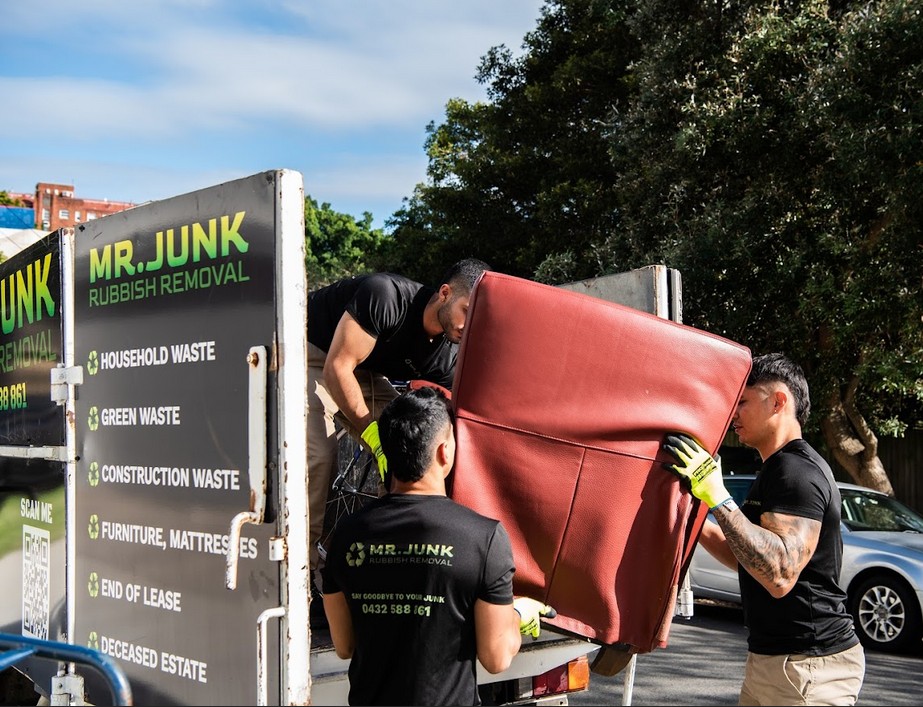
That’s where Mr Junk comes in. We operate across Sydney and can clear a property quickly, same-day in most cases. Our two-man team handles all the lifting and loading. You don’t need to sort, bag, or move anything yourself.
We remove furniture, mattresses, white goods, electronics, garden waste, bagged rubbish, carpets, and general junk. The only things we can’t take are chemicals, gas bottles, fuel, and asbestos.
Pricing is based on volume, what fills the truck, so you’re not paying a flat rate for a small job.
Or you can check out our skip bag option, fill the bag and we can come and collect it.
The short version
Someone left their stuff. You want it gone. Here’s the process:
- Document everything with photos before touching anything
- Identify the value of what’s been left, this determines your notice obligations
- Rubbish and perishables can go immediately, no notice needed
- Items under $1,000, serve notice, wait 14 days
- Items $1,000, $20,000, serve written notice, wait 28 days
- Items over $20,000, apply to NCAT before acting Keep records of all contact attempts
- Once the notice period has passed, call Mr Junk to clear it

Our Services
Get a free quote
Contact us today for a free, no-obligation quote and fast, reliable rubbish removal.